Finance and partners
FTPC Blagajna
A ledger for tracking debt across 115 partners — every payment and charge leaves a trace, and the balance reads in both dinars and euros.
Problem
Where business runs on trust, debt gets kept in a notebook or a spreadsheet. That works while there are a handful of partners. Past a hundred, three things start to fail: nobody knows from memory who owes what today, history is lost because the balance is written over the old one, and the arithmetic spans two currencies — goods and agreements in euros, collection in dinars. Each of those alone is bearable. Together they mean a disagreement cannot be settled, because there is nothing to go back to.
Solution
Instead of a balance that gets overwritten, the system keeps a ledger. Every charge and every payment is a record with a date, an amount and a note, and the balance is derived from them — so a partner's financial card shows not only how much is owed but how it got there. The euro rate is set in one place, so the same figures stand in both currencies without manual conversion.
What was built
- Business partner records with a live balance
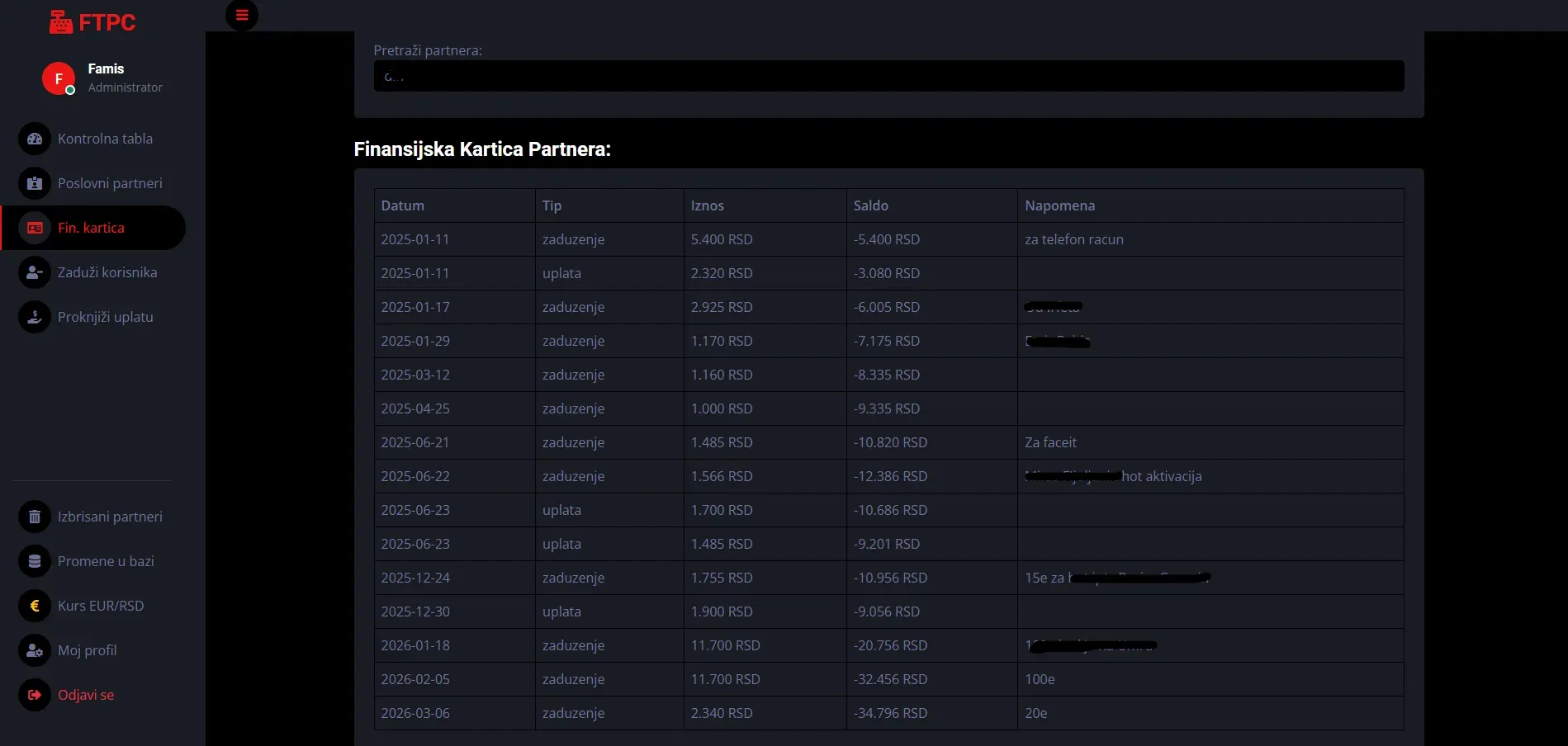
- Partner financial card — a ledger of charges and payments with running balance
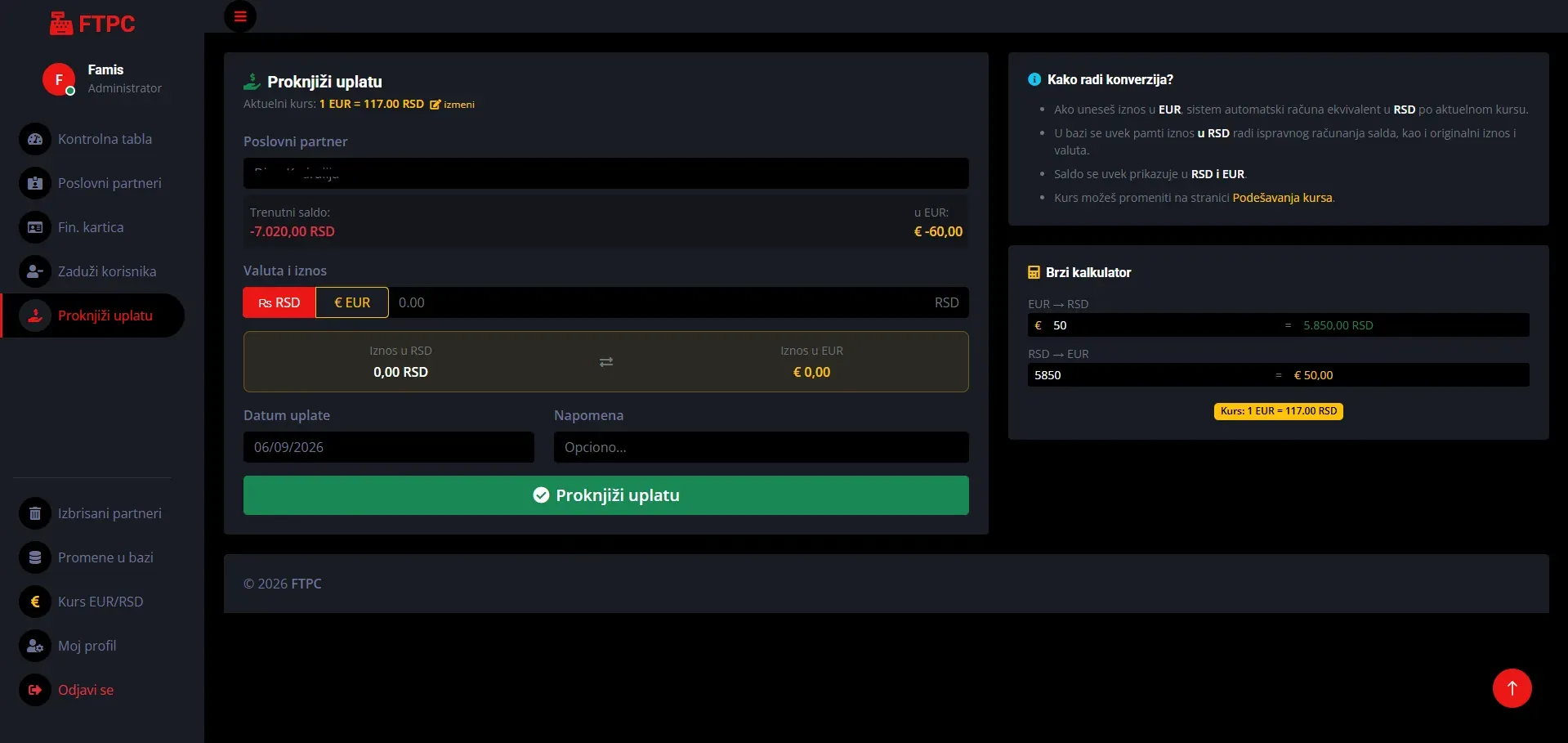
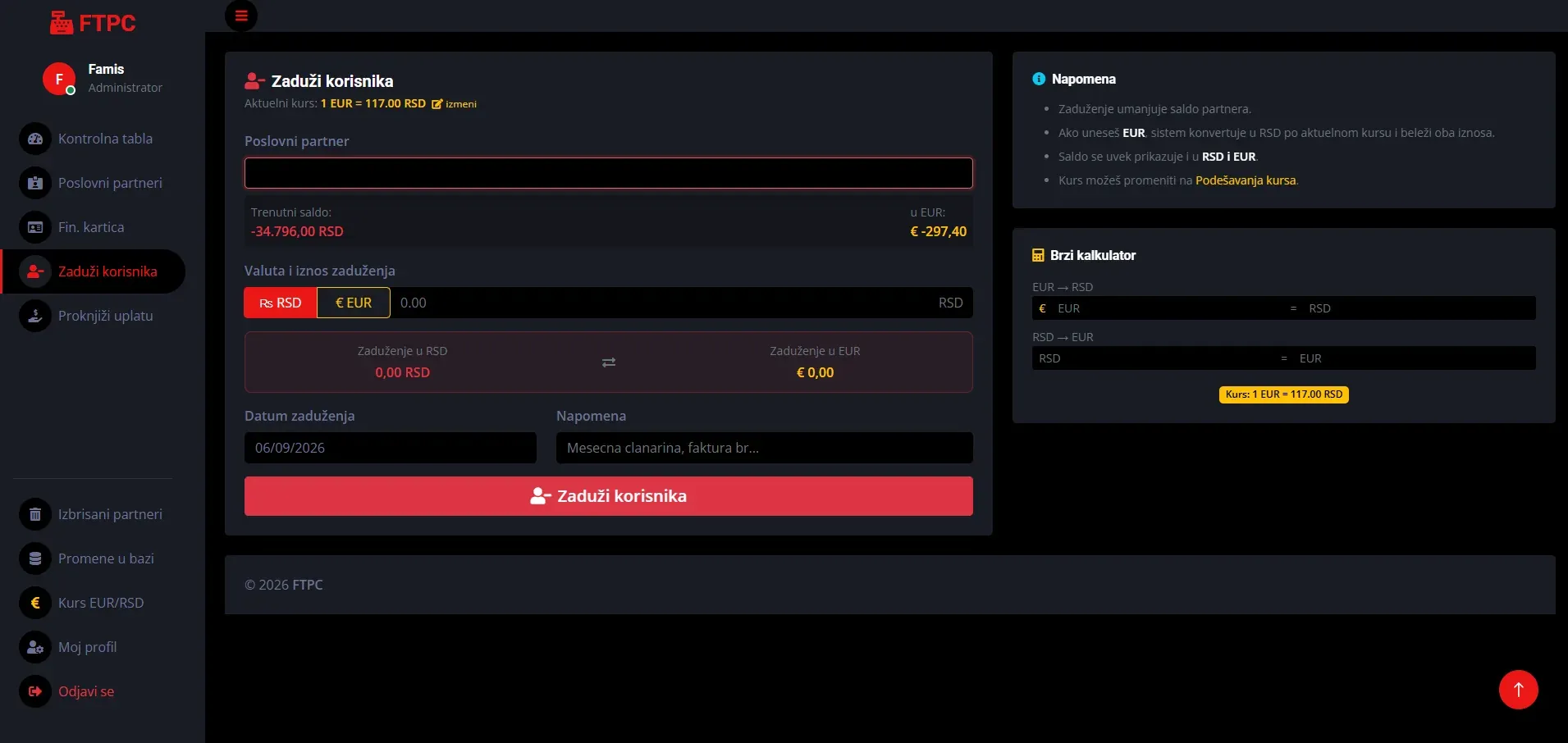
- Posting payments and charges, with a note on each entry
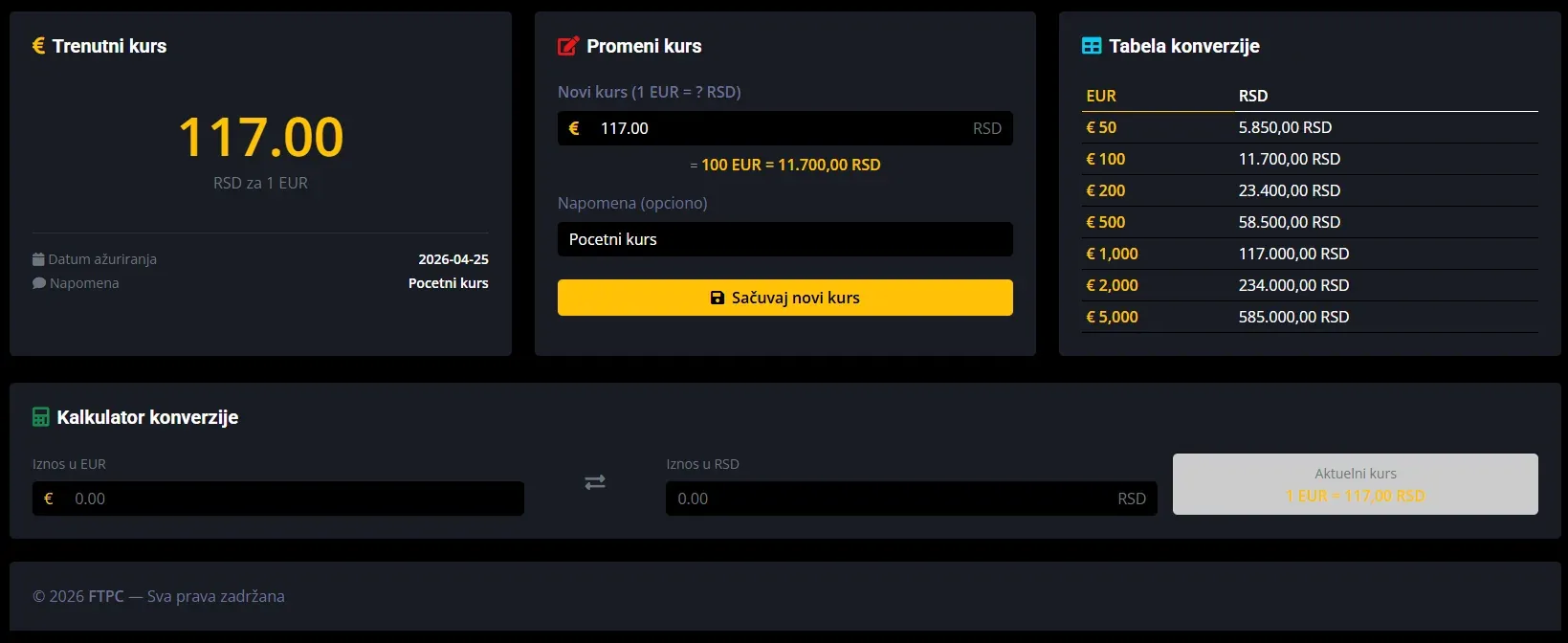
- Amounts shown in dinars and euros, at a rate set within the system
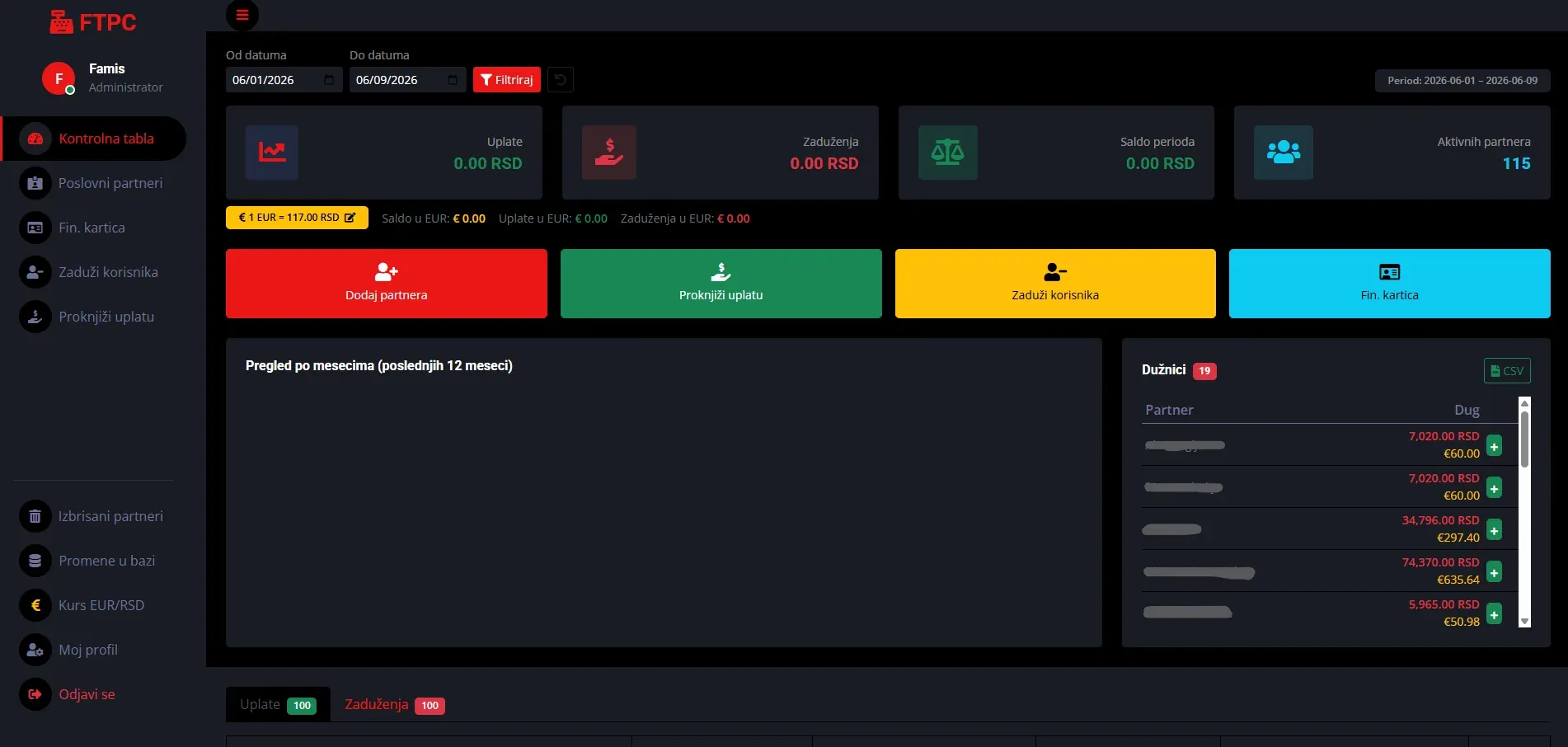
- Dashboard with payments, charges and the balance for a period
- Debtor list, ordered by amount owed
- Twelve-month view of activity by month
- CSV export of debtors
- Record of deleted partners, so history does not vanish with the account
- Log of all changes to the database
Debt is kept in a notebook for exactly as long as it can be remembered. Past a hundred partners that stops being true, but the notebook does not stop — it just starts lying.
The difference that solves it is not in the interface but in what gets stored. A notebook stores state: a number crossed out and replaced. This system stores changes: every charge and every payment is a record, and the state is their sum.
The consequence only shows when a disagreement arises. If only the state is kept, the dispute is settled by memory. If the changes are kept, you walk the card and find the date where the two accounts parted ways.
Hence two things that look incidental: a note on every entry, because a year later nobody remembers what a charge was for, and a record of deleted partners, because an account disappears and a debt does not.
Result
The question of what a partner owes today is answered in a second, and the answer comes with the history that explains it. A disagreement is settled by walking the card, not by arguing over what anyone remembers. Deleting a partner does not delete what happened with them.
From the application

Prefab houses and SEO · 2026
Relax Home
A site for a prefab and log house builder carrying several thousand visits a month, with a blog written from what people actually search for.
- PHP
- JavaScript
- HTML
- MySQL

Apartments · 2026
Galia Apartmani
A site for apartment rentals in Bar, in three languages, with guest reviews under each apartment and contact that leads to a phone call rather than a form.
- PHP
- JavaScript
- HTML
- MySQL
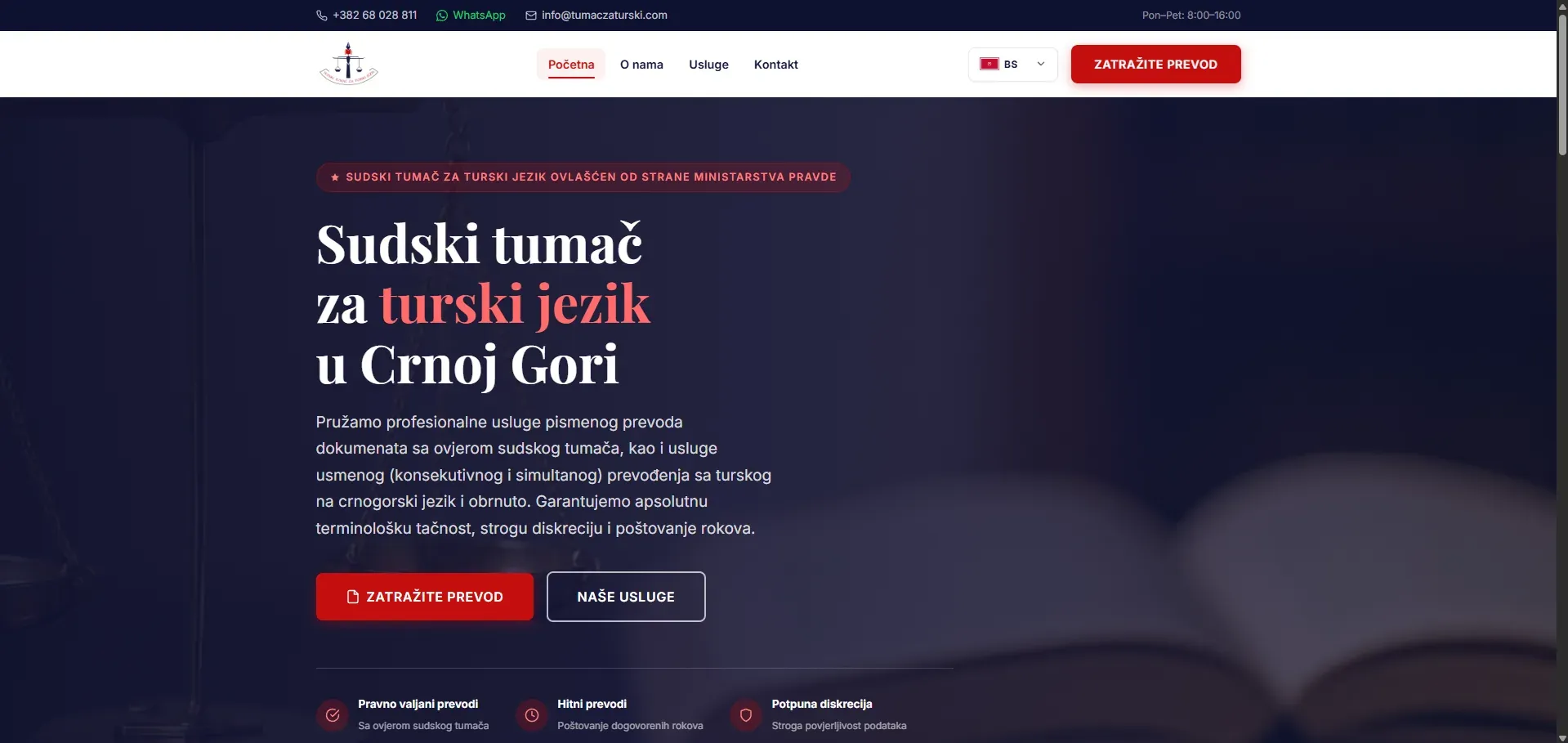
Court interpreter · 2026
Court Interpreter for Turkish
A site for a certified court interpreter for Turkish in Montenegro, in three languages, with downloadable PDF guidance and a translation request form.
- PHP
- JavaScript
- HTML
- MySQL