Website for the German market
Bralić & Dekić
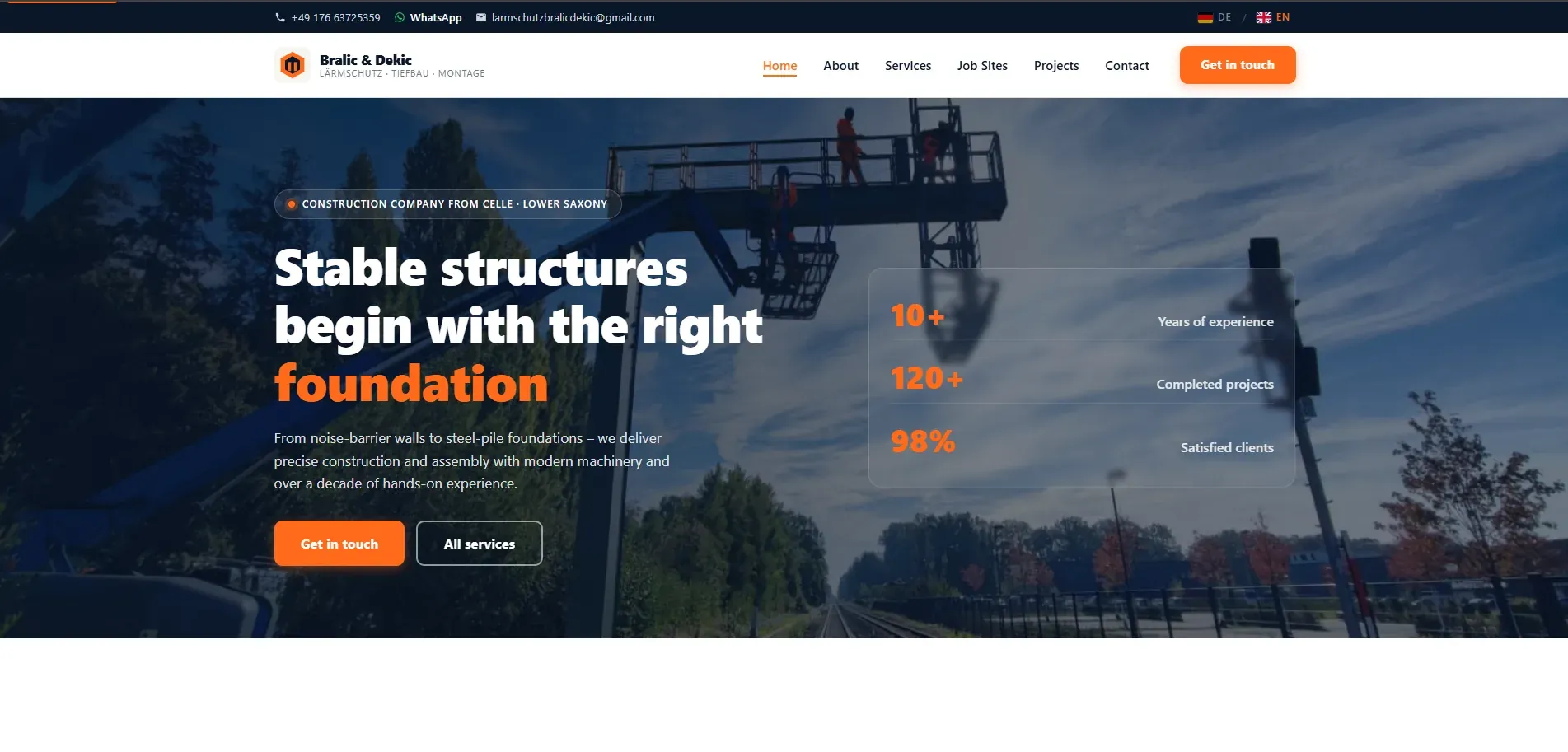
A website for a construction firm in Germany, built to German legal requirements, with a German-language admin the client uses to publish finished sites themselves.
Visit site ↗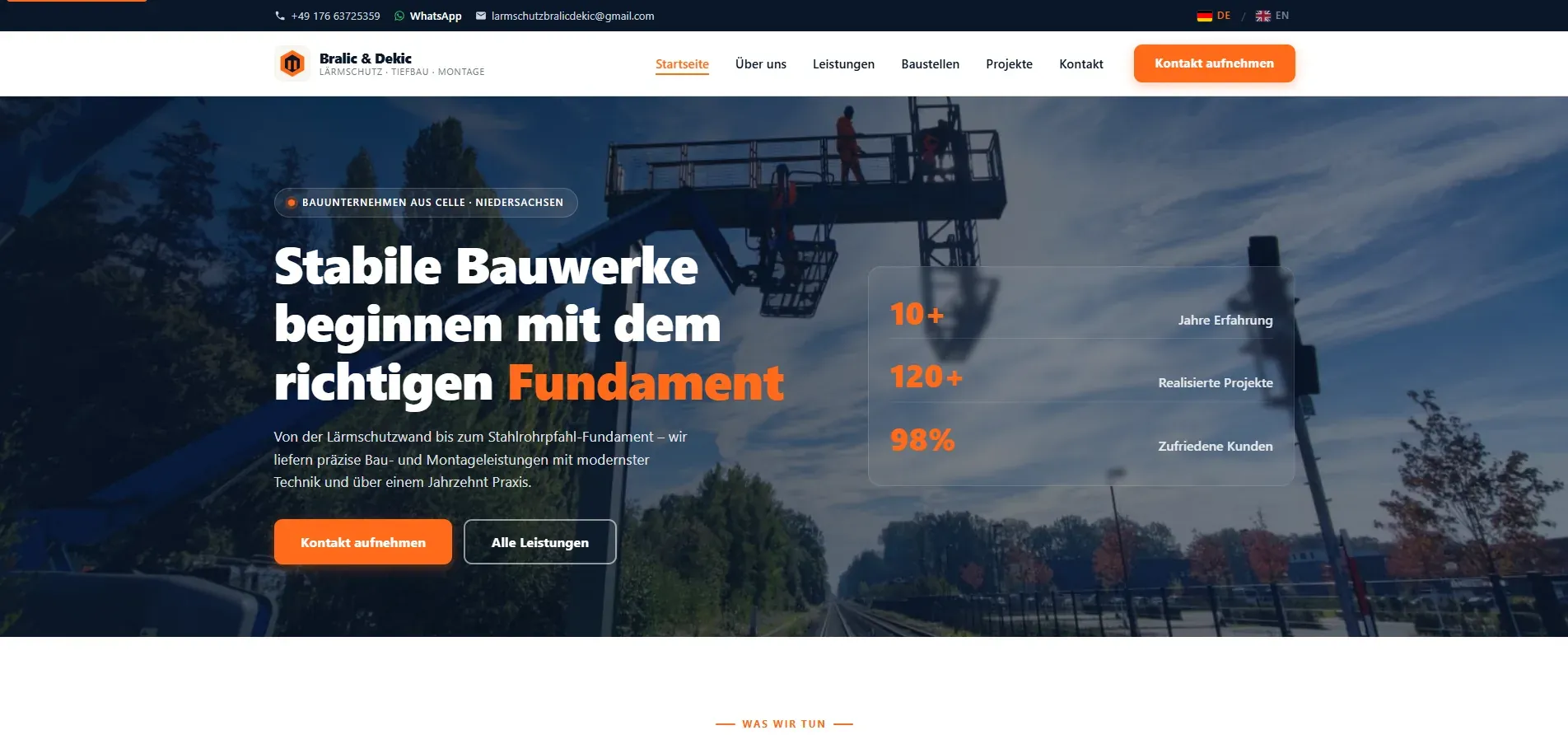
Problem
A firm from Montenegro working in Lower Saxony needs a website that stands on the German market, not a translation of one from home. Germany also has rules that do not exist here: company details must be publicly available in a prescribed form, processing personal data requires explicit consent, and cookies may not be set before the visitor agrees. That is not paperwork — in Germany a lapse of that kind tends to arrive as a lawyer's formal warning with costs attached, sent by a competitor rather than by the state.
Solution
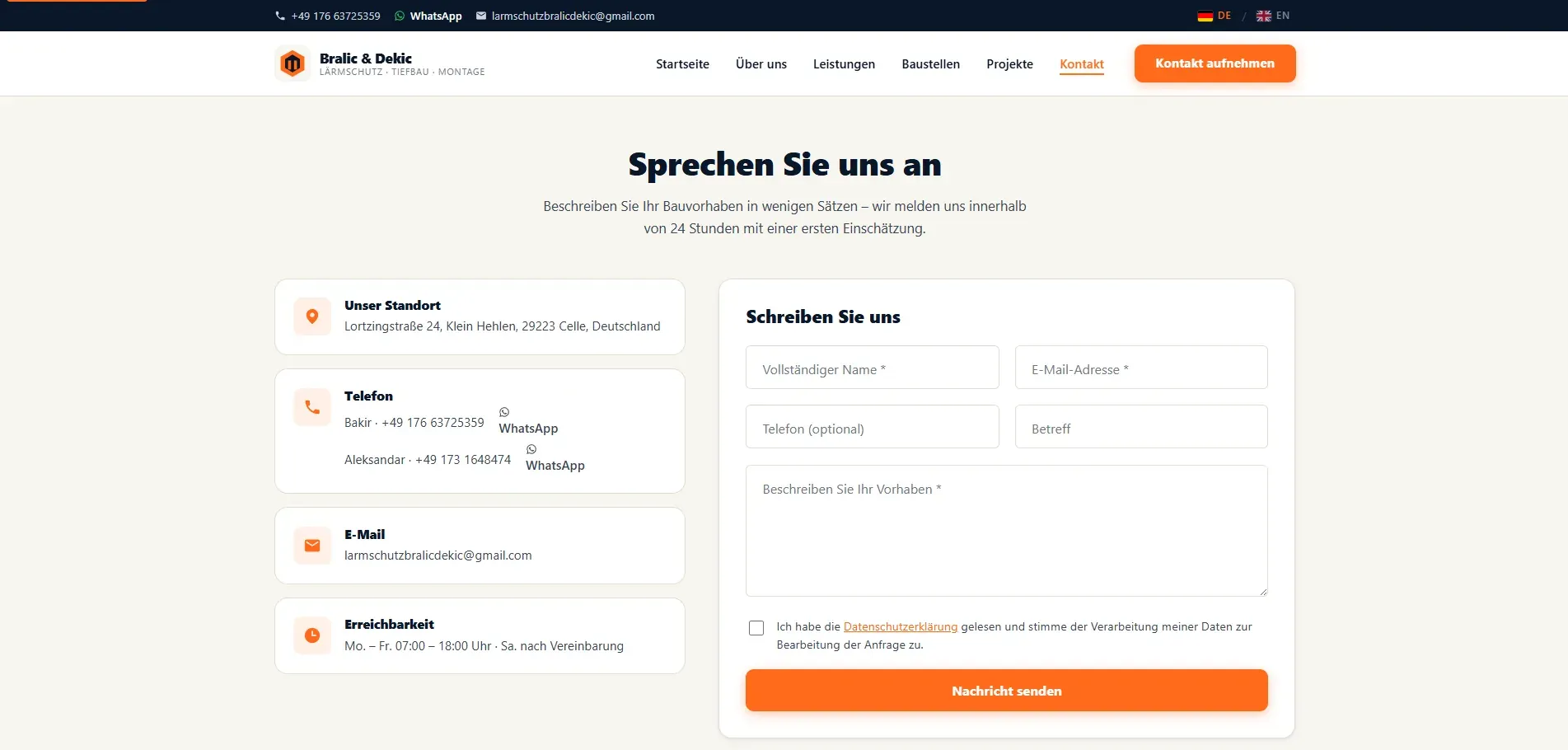
The site was built to German rules from the start rather than brought into line afterwards. The legal framework was researched before any code was written, so the Impressum, the privacy statement and cookie consent are part of the structure. The contact form requires explicit consent to data processing before it will send. The site is bilingual, German and English, and the admin panel is in German — because that is the language the client works in.
What was built
- Presentational site in German, with an English version
- Impressum carrying the legally required company details
- Privacy statement under the GDPR
- Cookie consent requested before anything is set
- Contact form with explicit consent to data processing
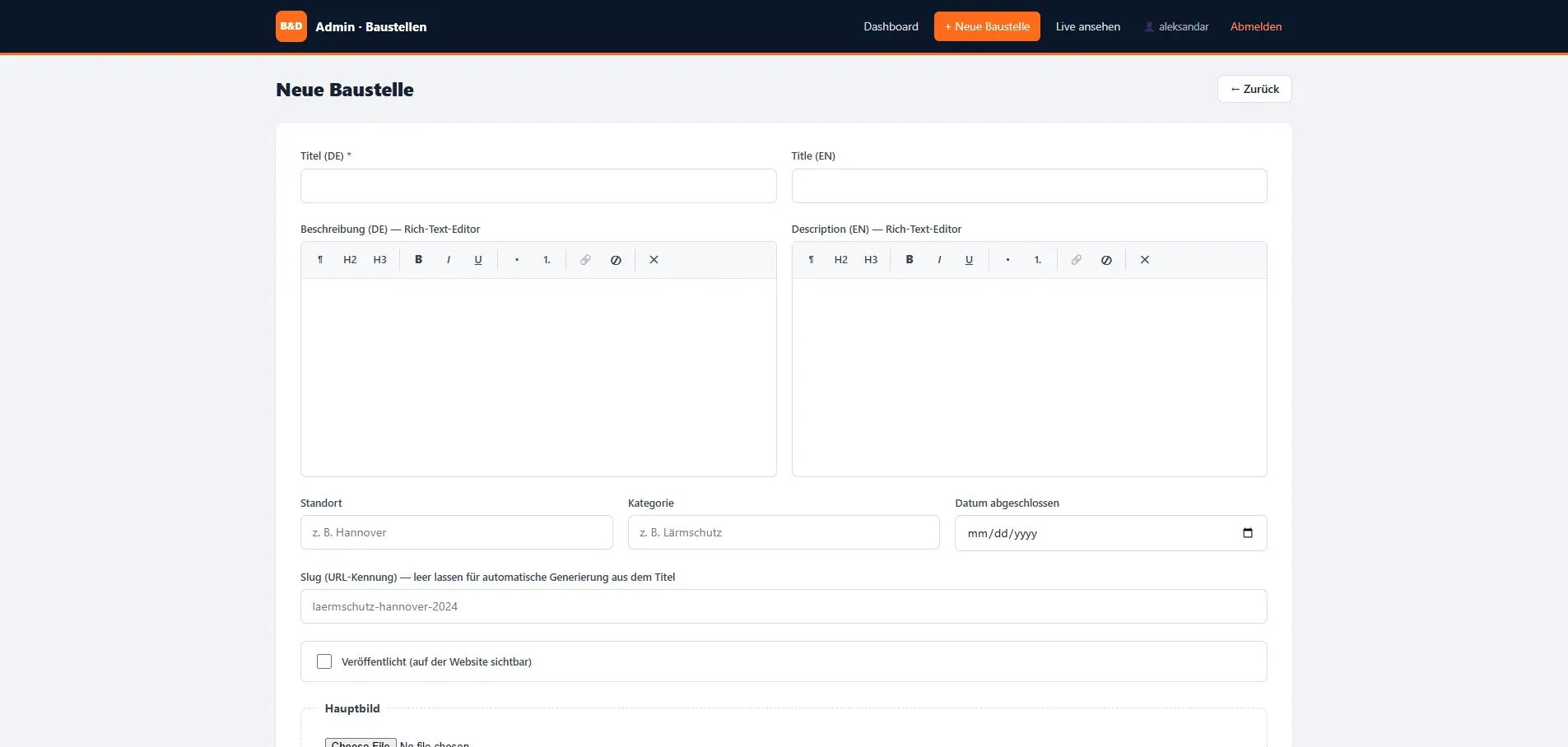
- Admin panel in German
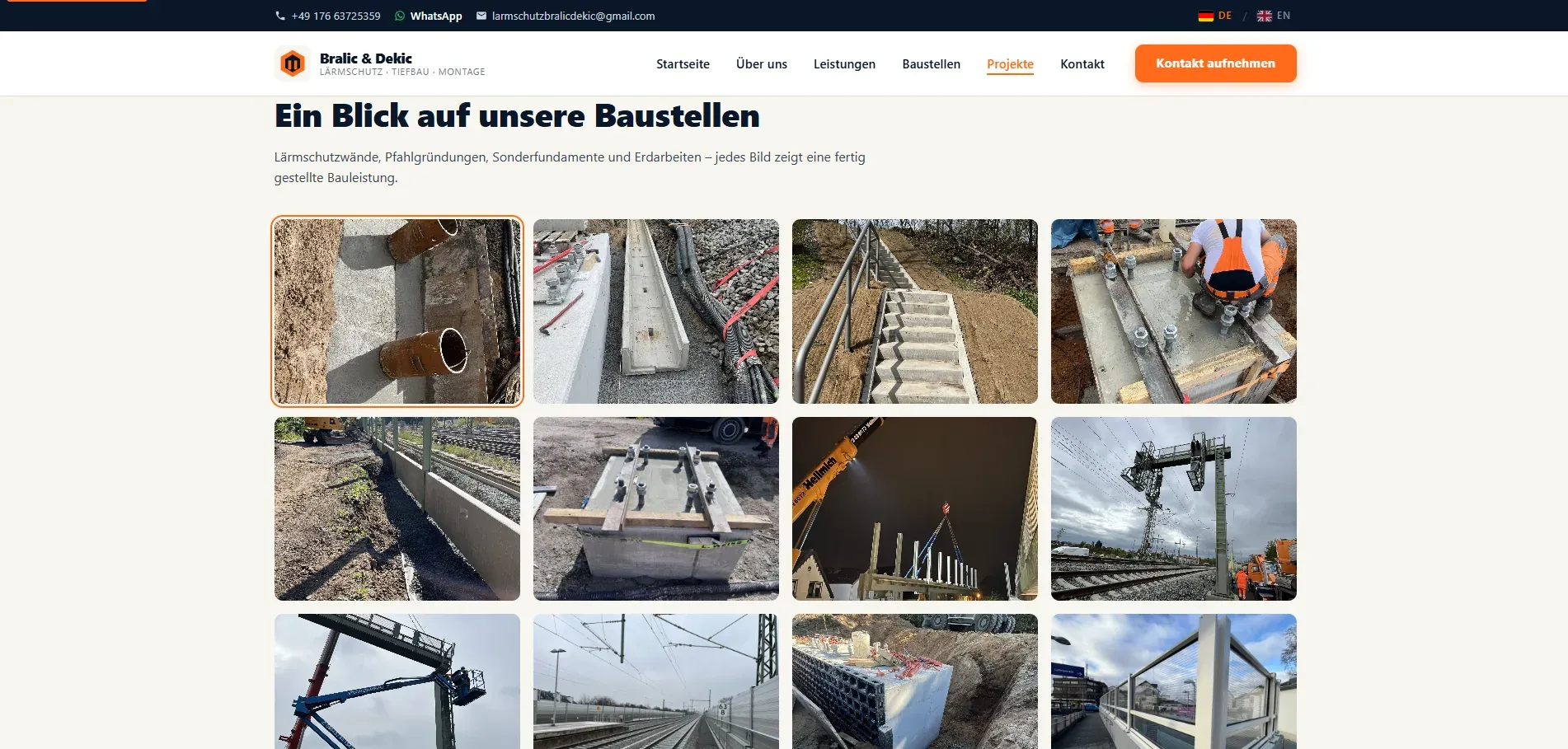
- Publishing finished construction sites with description and gallery
- Both languages entered in the same form, German and English side by side
- Rich text editor for descriptions, with headings and lists
- Slug generated automatically from the title
- Draft and published states, so a site is prepared then released
- Services and references pages
A website for a foreign market is not the same job as one at home, and the difference is not language. Germany requires company details to be publicly available in a prescribed form, personal data to be processed only with explicit consent, and no cookie to be set before the visitor agrees.
What makes that serious is how a lapse gets charged. In Germany the warning about a non-compliant site usually comes not from the state but from a competitor’s lawyer, with a bill attached. A client just entering that market does not experience such a mistake as a formality.
So the legal framework was researched before the first line of code. The Impressum, the privacy statement and cookie consent were not bolted on at the end; they are part of how the site is built.
The other half of the job was keeping the client independent. The admin panel is in German, and a construction site is entered in both languages in one form. In this trade finished work is the main proof — and that proof should reach the website the day the job closes, not whenever the web developer gets round to it.
Result
The client publishes finished sites the moment they close them, in their own language, with nobody in between. The website has met German requirements from day one, so the firm carries none of the exposure that costs money there. The researched legal groundwork stays as a base for every further job on that market.
From the application

Configurator and quotes · 2026
Royal Plast
A quoting tool for joinery that works out the price from dimensions and options, draws the window, and produces a PDF ready for the customer.
- PHP
- JavaScript
- HTML
- MySQL
Finance and partners · 2026
FTPC Blagajna
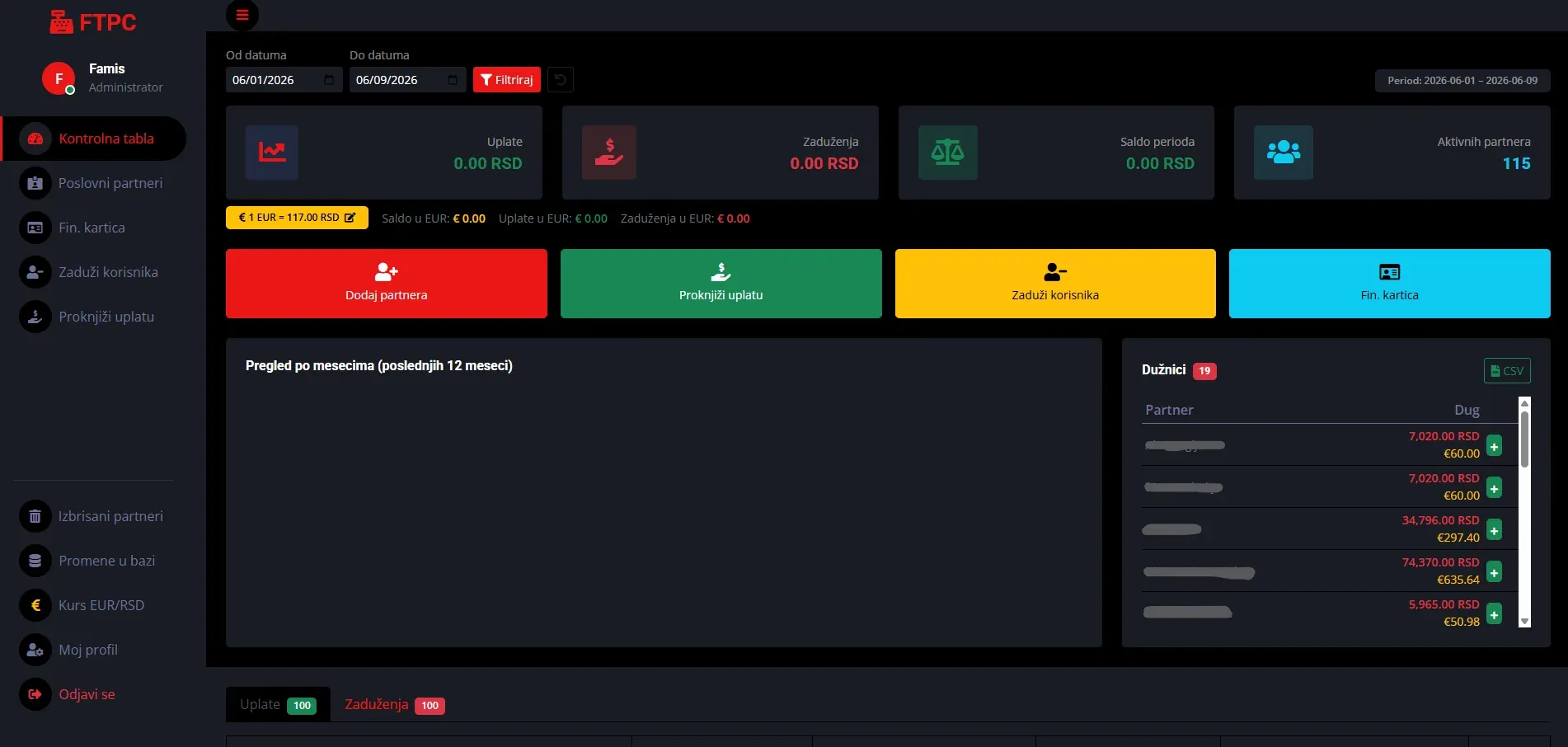
A ledger for tracking debt across 115 partners — every payment and charge leaves a trace, and the balance reads in both dinars and euros.
- PHP
- JavaScript
- HTML
- MySQL
Prefab houses and SEO · 2026
Relax Home
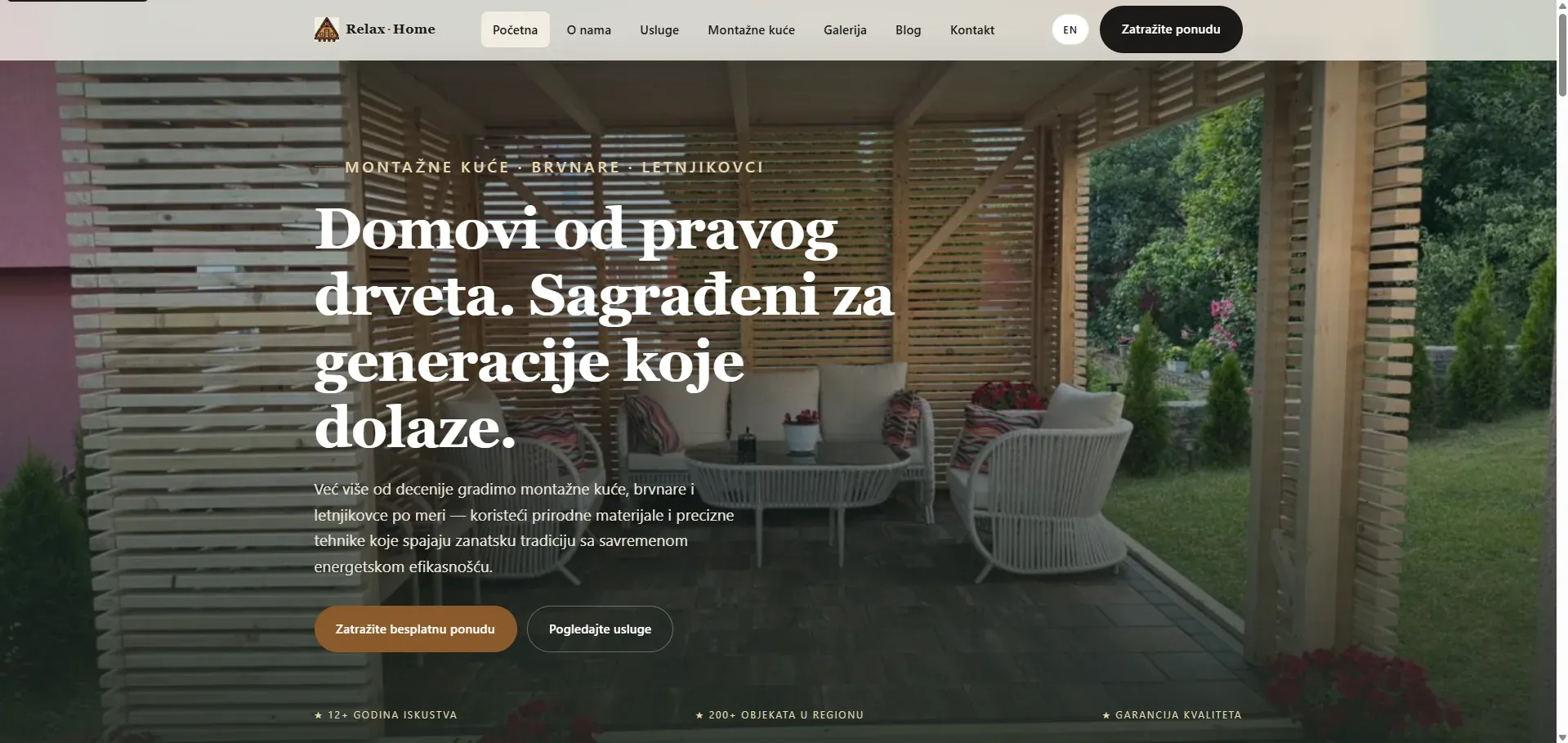
A site for a prefab and log house builder carrying several thousand visits a month, with a blog written from what people actually search for.
- PHP
- JavaScript
- HTML
- MySQL