E-commerce and automation
EcoLED
A shop with over 1,700 products that nobody keys in — stock, prices and catalogue arrive from the supplier on a schedule, and selling runs across three channels.
Visit site ↗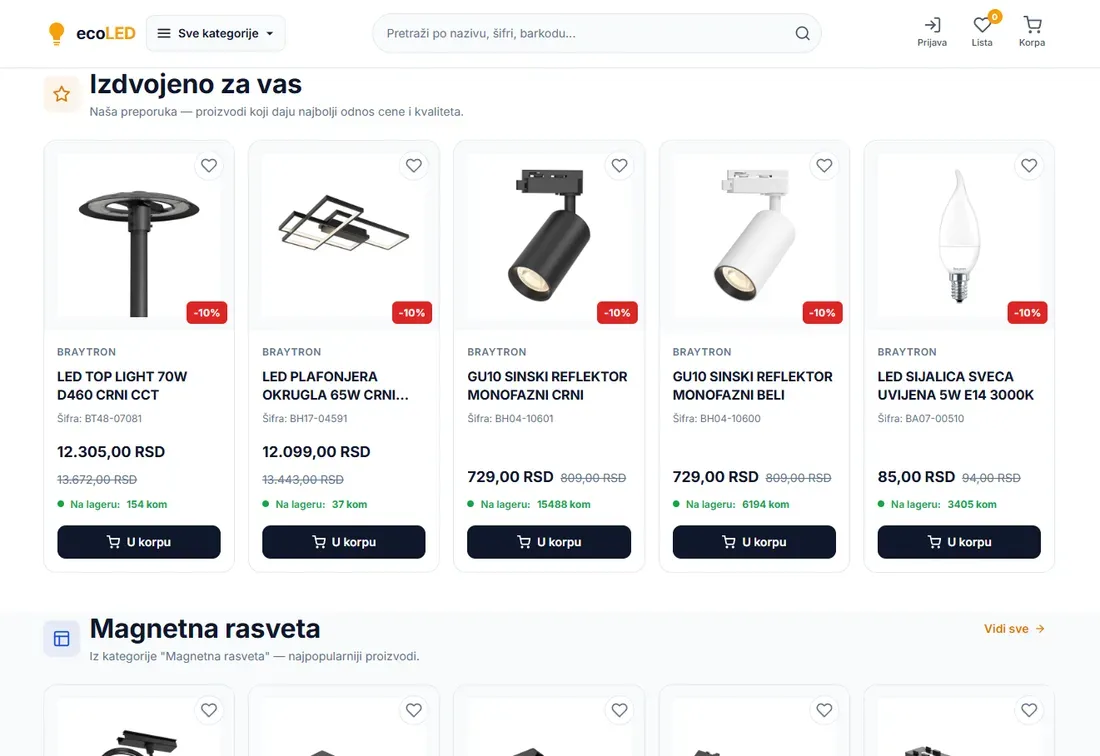
Problem
A shop with thousands of products held by a supplier has one job that never stops: upkeep. Stock changes through the day, prices change, the supplier introduces new products. Keyed in by hand, the shop is always behind — selling what is gone, or not selling what has arrived. That same work then multiplies with every new sales channel, because Ananas and Shoppster each want their own prices and their own catalogue.
Solution
The site synchronises with the supplier on a schedule rather than on request. Stock refreshes every hour, prices several times a day, and once a day the whole catalogue is walked — new products enter the right category on their own, with the margin already set for it. Products and prices are pushed to Ananas and Shoppster too, with every channel keeping its own prices, margins and promotions, independent of the rest.
What was built
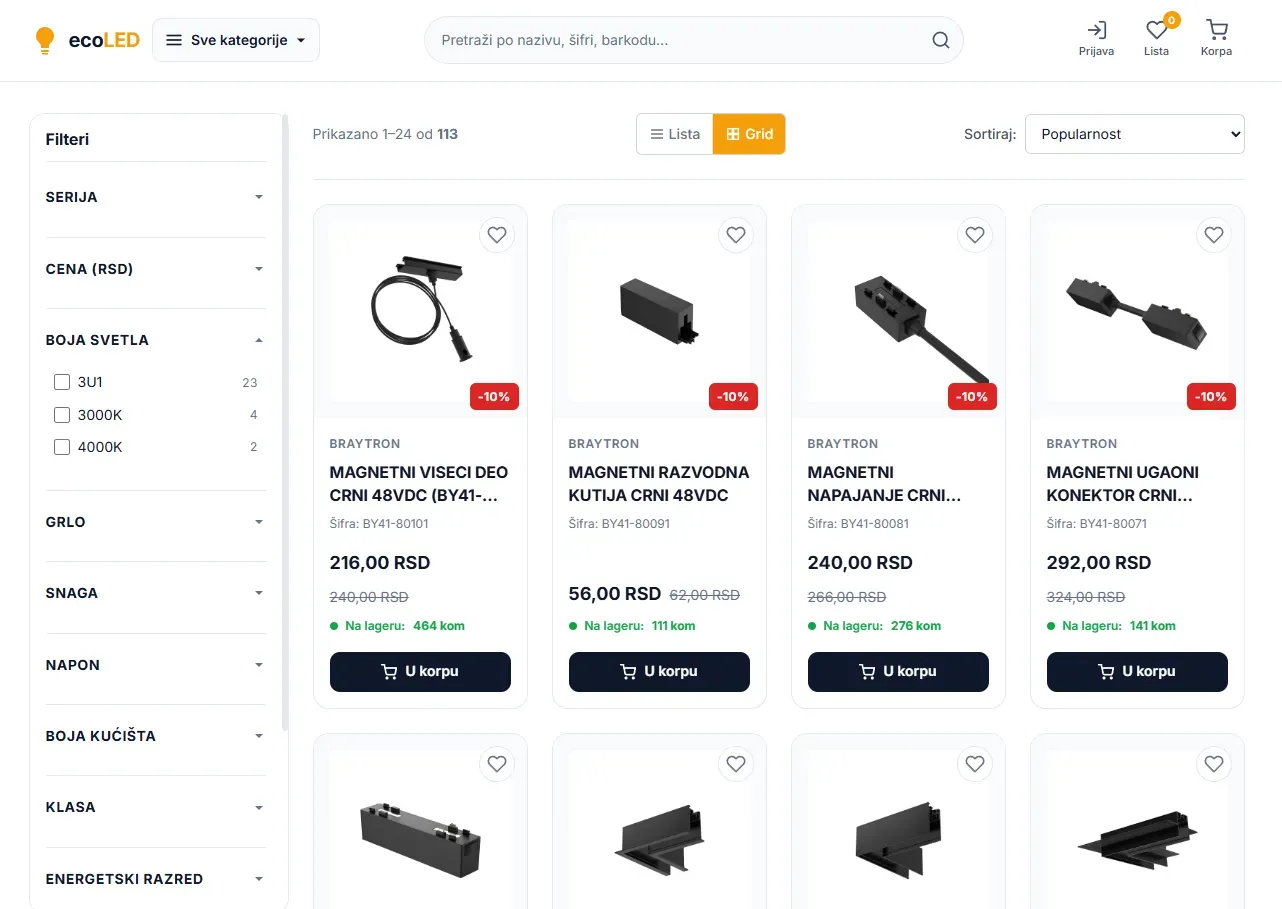
- Custom e-commerce with a catalogue of over 1,700 active products
- Hourly stock synchronisation with the supplier
- Price synchronisation several times a day
- Daily walk through the entire catalogue, adding new products automatically
- New products filed into a category with its margin already set
- Pushing products and prices to Ananas and Shoppster
- Separate prices, margins and promotions per sales channel
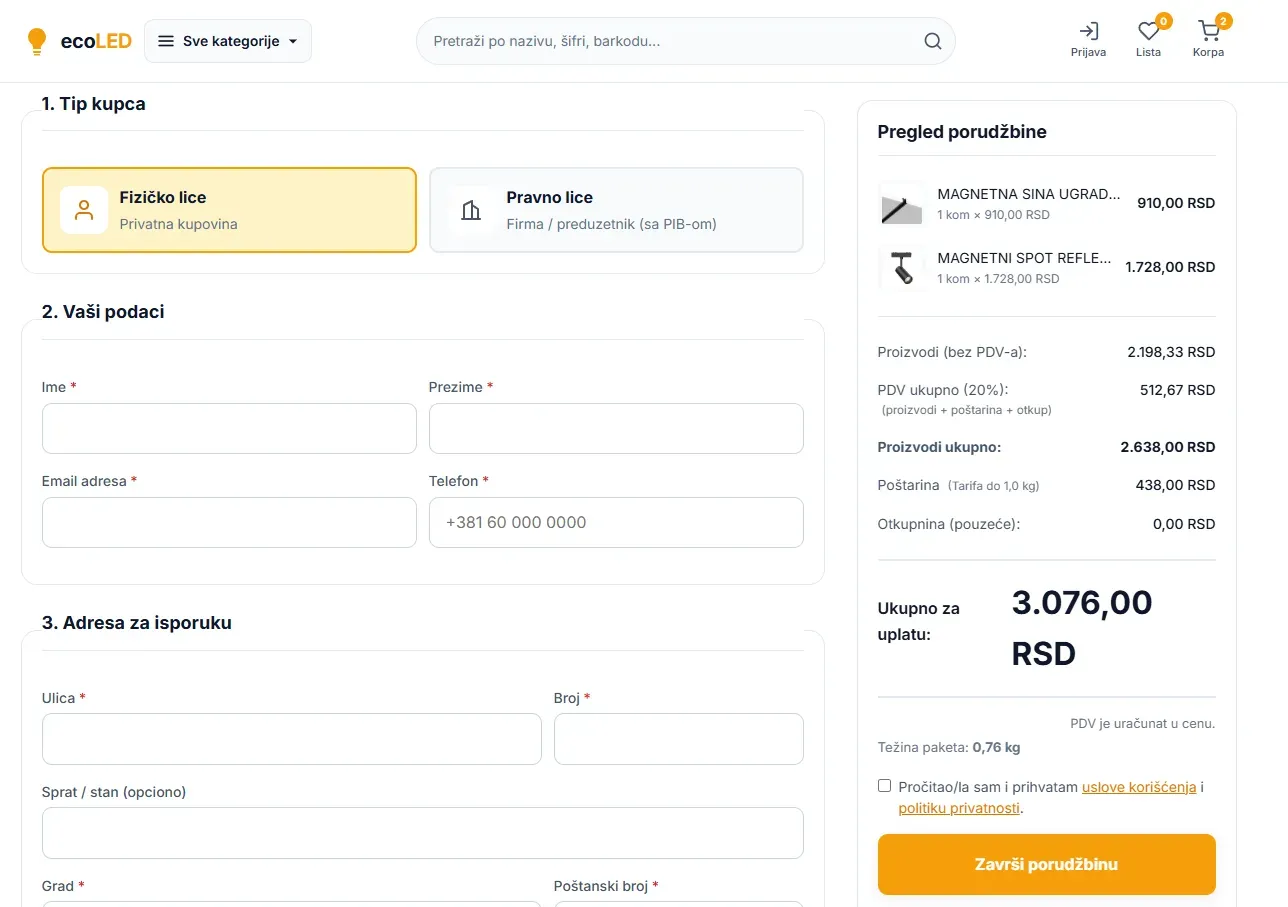
- Card payments through OTP banka
- B2B ordering for companies, alongside retail
- Automatic email to the customer on every order status change
- Shipment statuses pulled from BEX over their API
- Category filters derived from the attributes of products within them
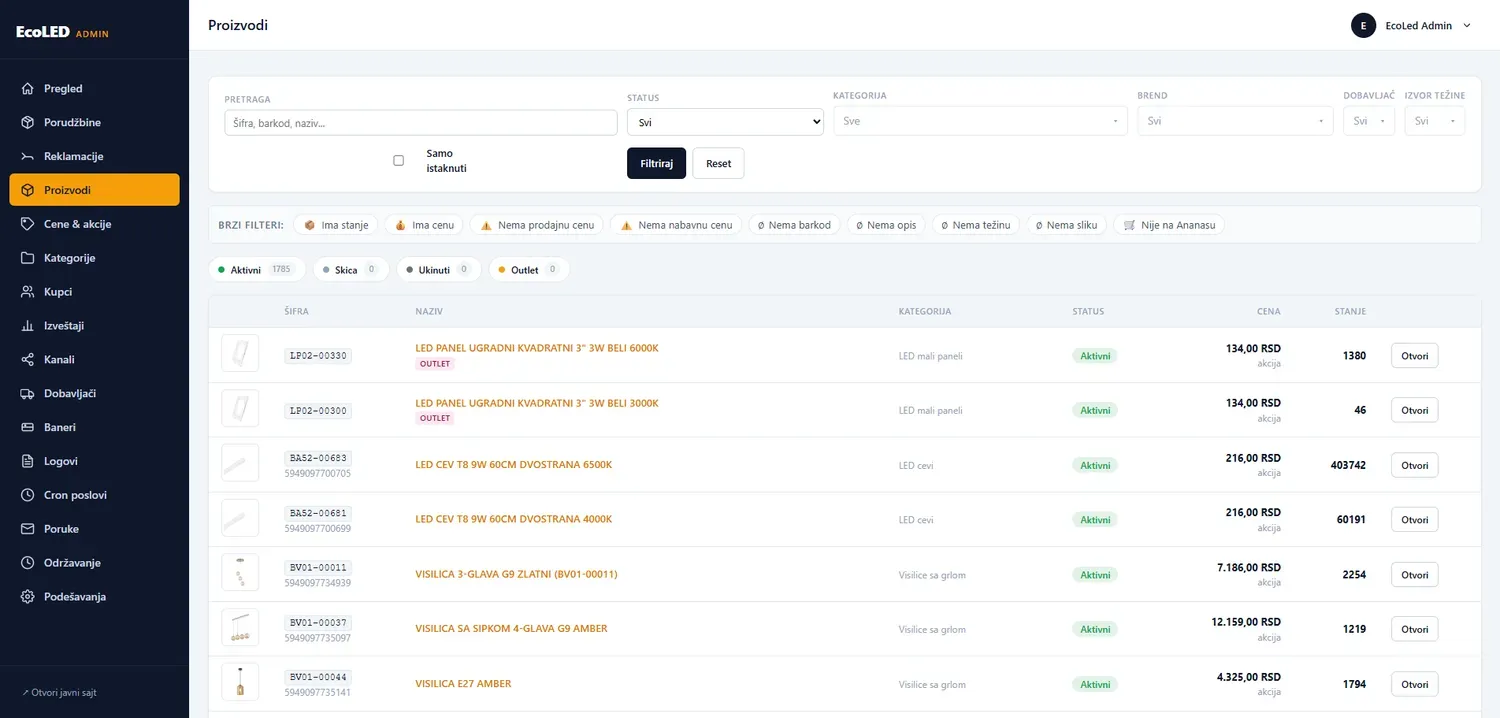
- Every cron job recorded, with a view of it in the admin panel
A shop with thousands of products held by someone else has one job that never stops: upkeep. It is work nobody sees while it is being done, and everybody sees the moment it stops — a customer orders something that is gone, or fails to find what arrived yesterday.
So there is no keying in here. Stock, prices and the catalogue live at the supplier, and the site mirrors them on a schedule: stock hourly, prices several times a day, the whole catalogue once a day. A new product waits for nobody — it enters its category with the margin already set for it.
The part easiest to overlook is that every job is recorded. The admin carries Logs and Cron jobs, so you can see what ran, when, and how it ended. Automation you cannot inspect is not an advantage but a risk — it runs quietly both when it works and when it does not.
Result
The catalogue maintains itself. What the supplier introduces shows up in the shop the same day, in the right category and at the right price, and on-site stock follows real stock through the day. Three sales channels are served from one source, each on its own pricing. The customer learns of every change to an order by email, without anyone telling them by hand.
From the application

Real estate portal · 2026
Sigma Premium Realty
A real estate portal for the Montenegrin coast in three languages with translated URLs, its own analytics, and a search that records what buyers ask for and cannot find.
- Laravel 12
- PHP 8.3
- MySQL 8
- Livewire 3
Website for the German market · 2026
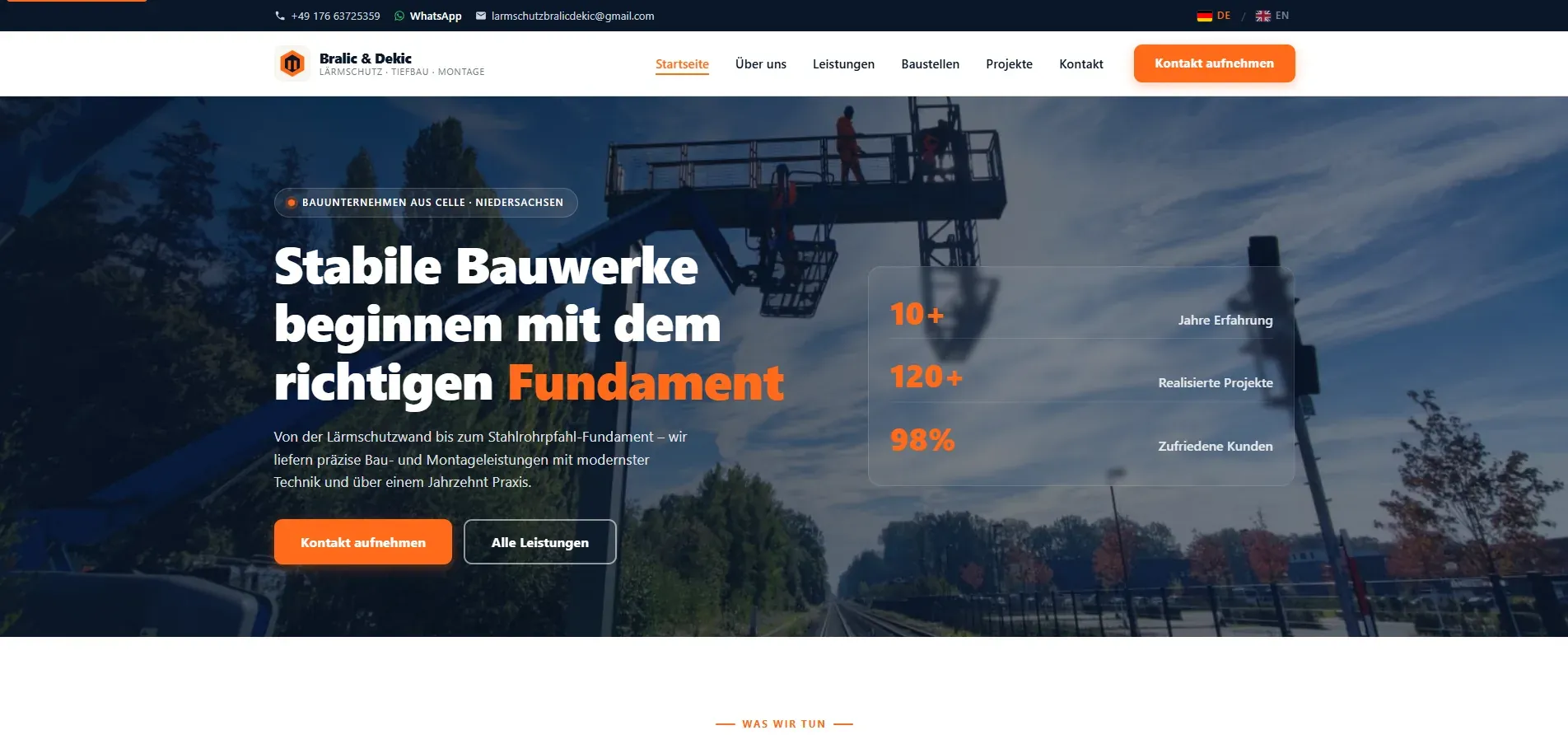
Bralić & Dekić
A website for a construction firm in Germany, built to German legal requirements, with a German-language admin the client uses to publish finished sites themselves.
- PHP
- JavaScript
- HTML
- MySQL

Configurator and quotes · 2026
Royal Plast
A quoting tool for joinery that works out the price from dimensions and options, draws the window, and produces a PDF ready for the customer.
- PHP
- JavaScript
- HTML
- MySQL