Order configurator
Adriatex konfekcija
A desktop application for ordering made-to-measure workwear — each garment through its own fields, with an order list, statuses and an A4 work order that prints.
Problem
A made-to-measure work jacket is not one item but some twenty decisions: jacket colour, shoulder colour, piping, fluo tape width, lower pocket model, welt colour, cuff model, whether the sleeve detaches. Every one of them has to reach the sewing machine exactly as agreed. When a spec like that travels by word of mouth or on a handwritten slip, it is never the whole order that gets lost — it is one field. And a piece sewn with the wrong piping colour does not go back on the shelf; it is scrap.
Solution
Each garment type got its own form, holding only the fields that garment actually has, and choices come from dropdowns rather than free text. Colours and models therefore cannot be written down two different ways. The order is stored in the database, carries a status, and can be edited or deleted while it is in production. From the order list, an A4 work order prints and travels with the piece through the shop.
What was built
- Six garment types — trousers, bib overalls, jacket, vest, coveralls, shorts
- A separate form per type, holding only the fields that garment has
- Dropdown choices instead of free-text entry
- Order list with filtering by garment type
- Editing and deleting existing orders
- Order status, tracked through production
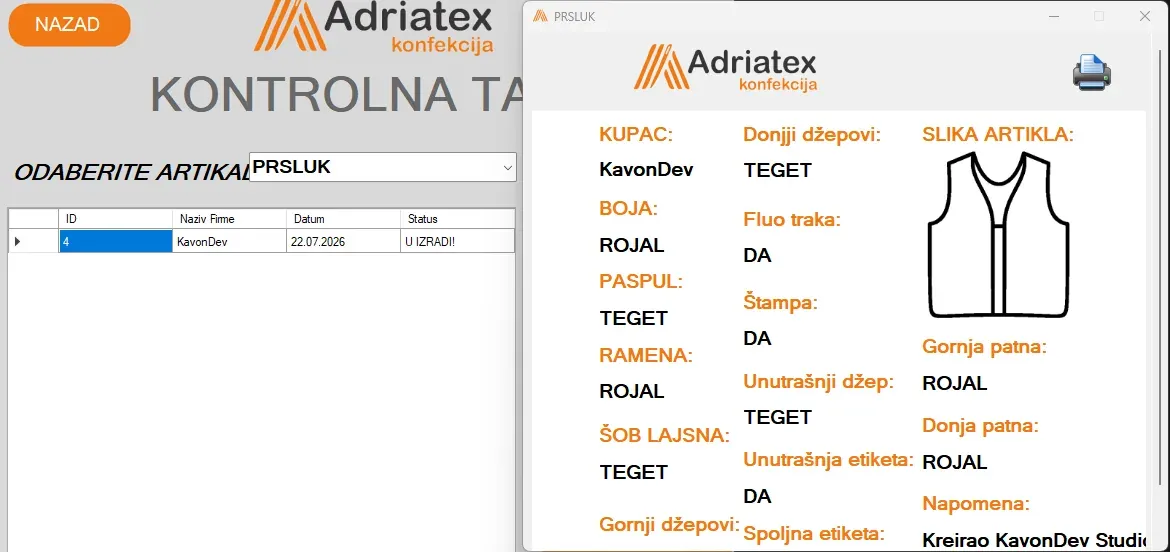
- A4 work order print with every selected option
- A note field on each assembly, for anything agreed off the list
This is a tool for the shop floor, not for a shop window. Worth saying up front, because judged on looks it is being measured with the wrong ruler.
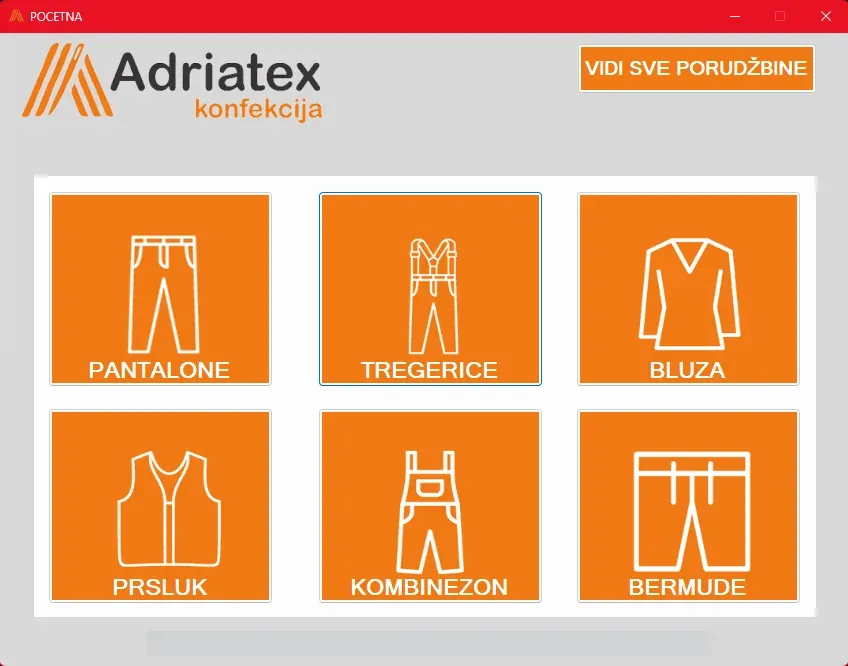
The home screen is six large orange tiles with a line drawing of the garment. That is not decoration. Someone working at a machine picks the garment in passing, with a finger, without leaning in. A big target you hit first time is worth more there than a subtle layout.
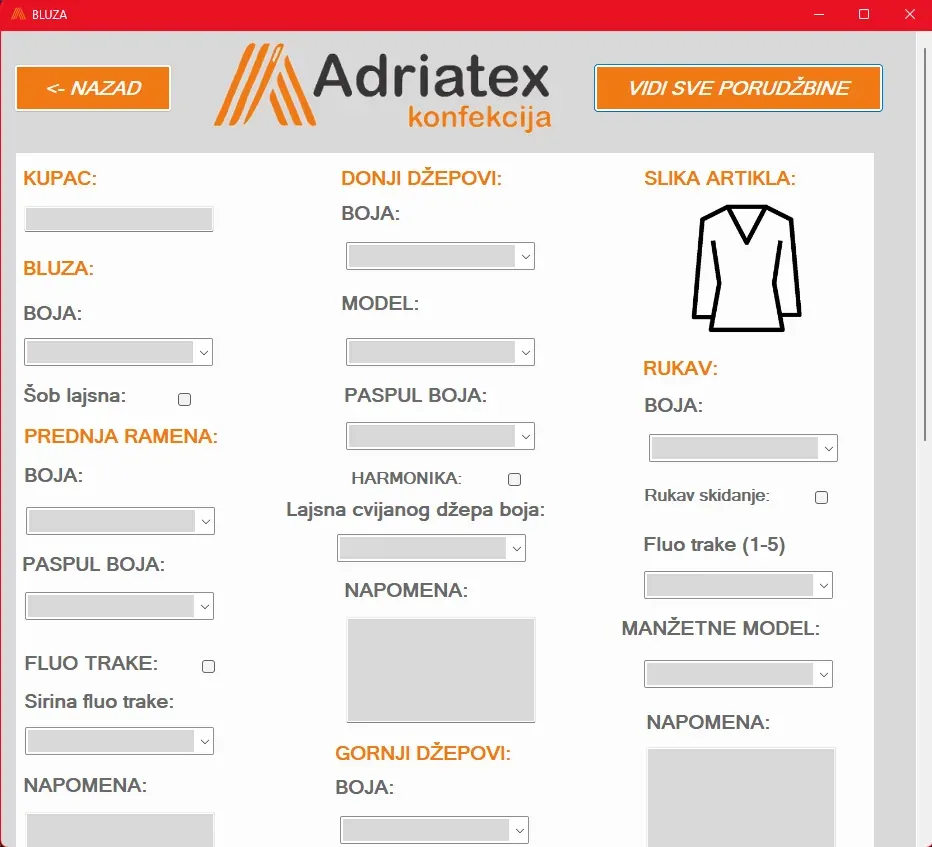
The form itself is dense, and I will not excuse that by calling the domain complex. It is dense because a made-to-measure jacket has twenty-odd attributes and none of them may be left out. What could be chosen was how those attributes are entered: from dropdowns, grouped by part of the garment — shoulders, pockets, sleeve — in the same order the piece is assembled. The garment illustration sits beside the form so nothing is configured from memory.
The decision that matters most in practice is the least visible one: there is no free-text field for colour. “Royal”, “royal blue” and “ROYAL” are one colour to a person and three distinct values to a database — and searching by them stops working silently, only once the number of orders grows.
Result
The spec for a piece exists as a record rather than as an understanding. The same work order can be reprinted when it goes missing, the status shows how far the piece has got, and colours and models are picked from a list, so they never exist in two versions.
From the application
Integrations and government systems · 2023
E-invoicing service
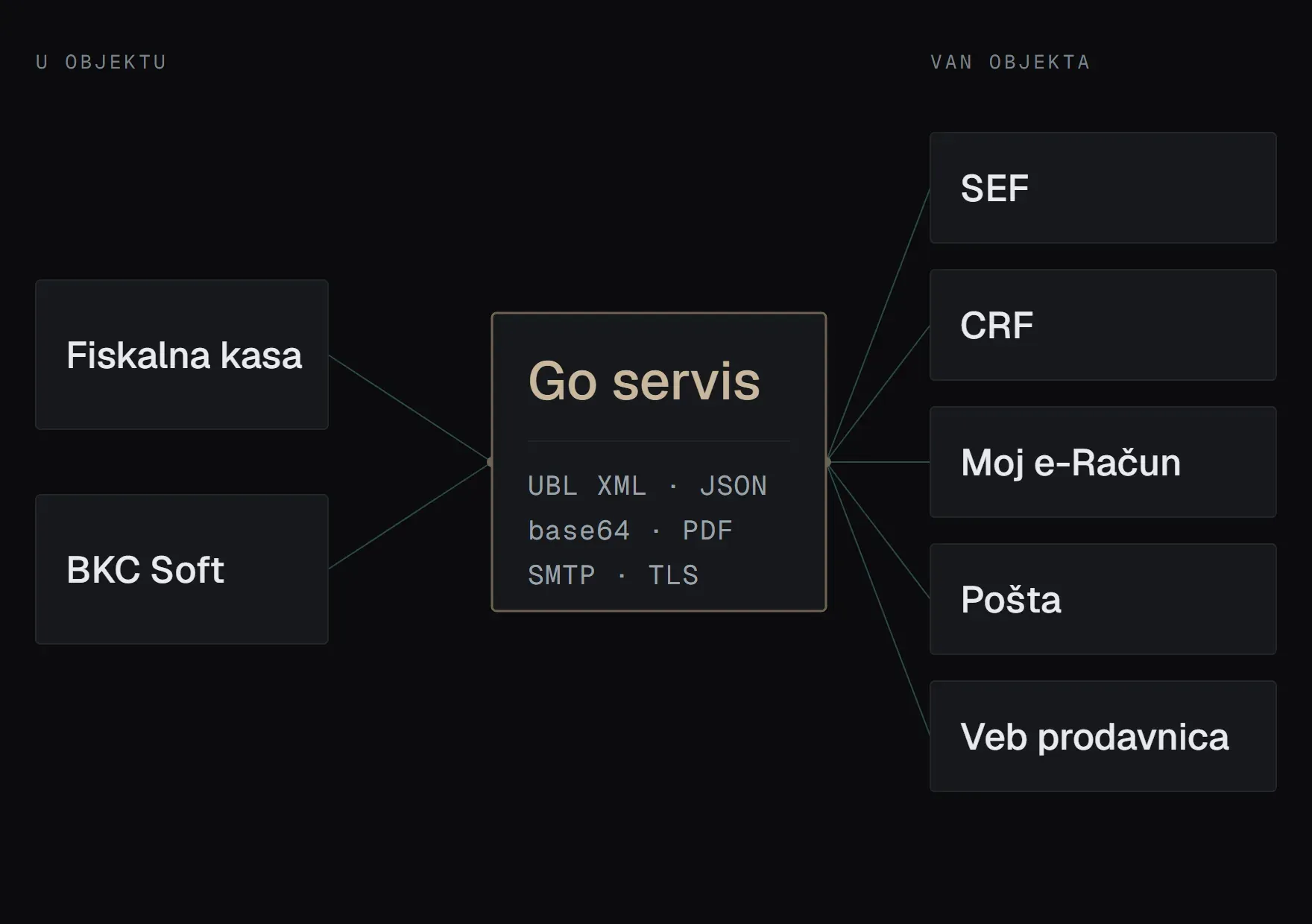
A Go service that opens the door from the till software to the national e-invoicing system, electronic delivery notes and email. Everything leaving the shop goes through it.
- Go
- HTTP
- XML
- JSON
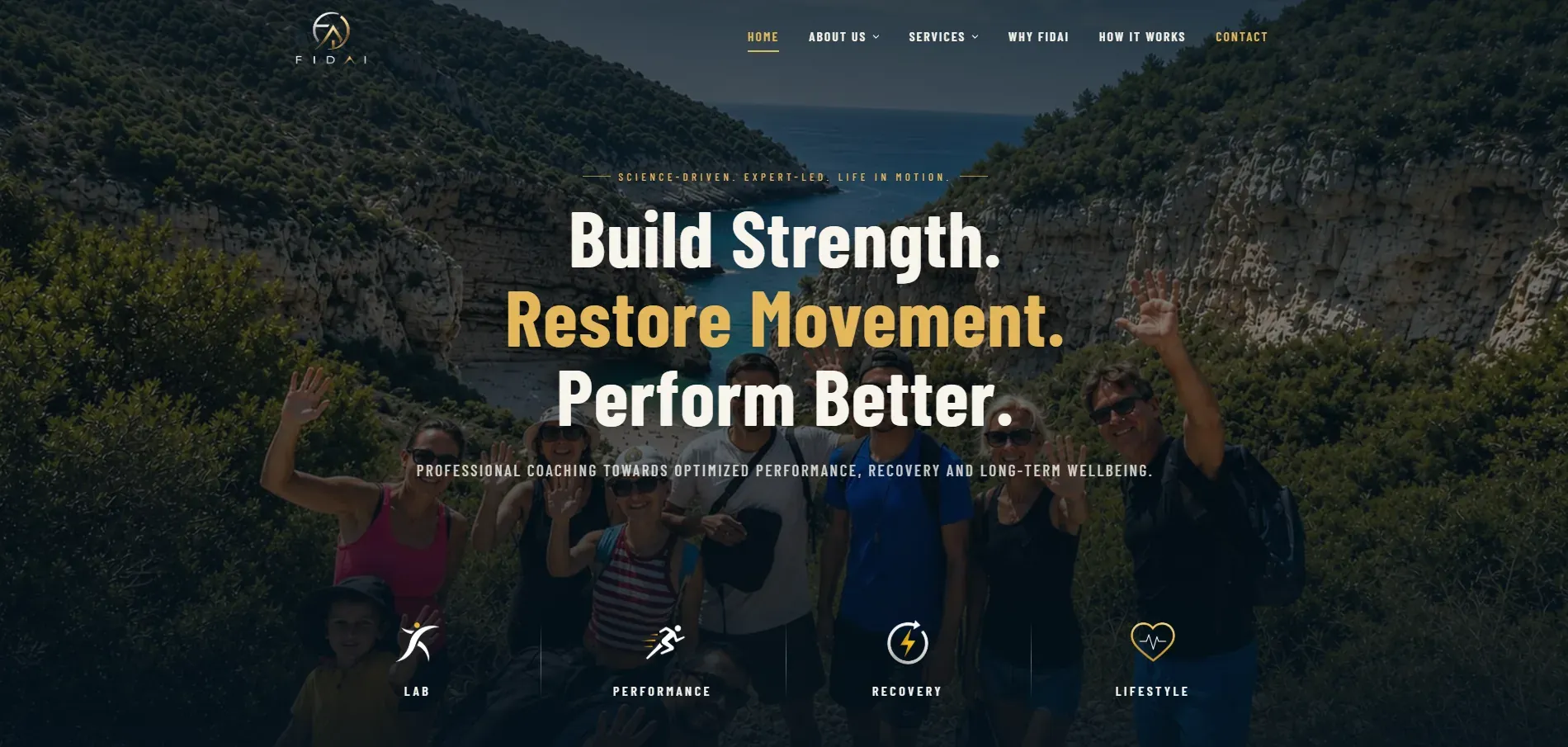
Brochure site and custom CMS · 2026
FIDAI Coaching
A brochure site for a sports coaching studio in Montenegro, with a custom CMS the client uses to rebuild every page themselves — no WordPress, no calling the developer.
- PHP
- MySQL
- JavaScript
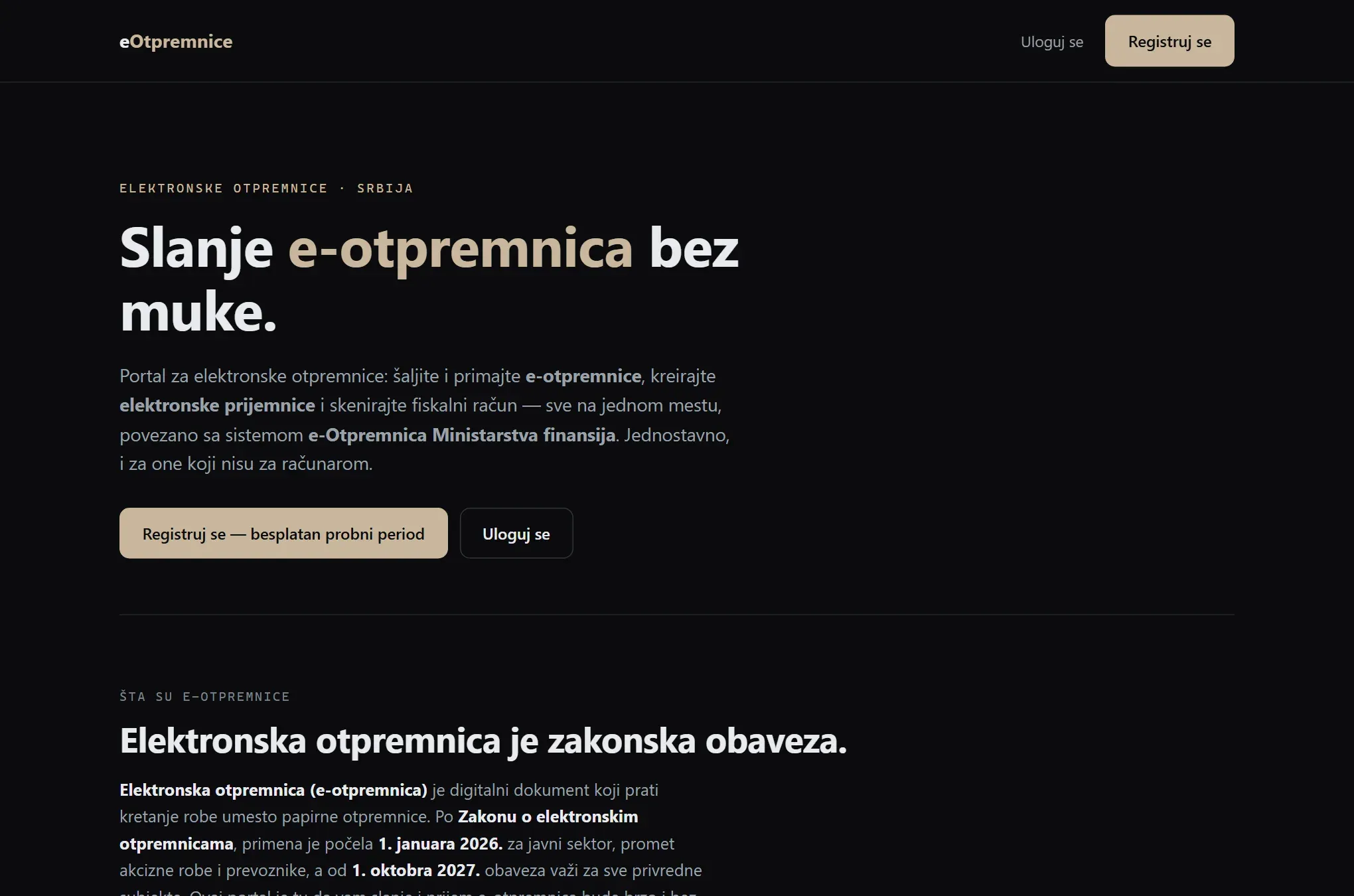
B2B portal · 2026
eOtpremnice
A portal for sending and receiving electronic delivery notes and receipts, connected to the state system. No card reader, no ID card — it works even from a phone. Free to try.
- PHP
- MySQL
- JavaScript